Managed Teams vs Legacy Vendors: Fixing Roadmap Delays Caused by Hiring
Budget approved. Scope defined. Business case signed off. And still, the sprint never actually starts, because the team assembling around the project is not complete. This is one of the most common and most invisible reasons a roadmap slips, and it rarely gets named correctly. Leadership calls it a scheduling issue. It is really a structural issue, and the comparison between managed teams vs legacy vendors explains exactly why.
In our engineering reviews across SuperBotics’ 500+ successful deployments, one pattern shows up with striking consistency. Organizations rarely lose roadmap time to bad technology decisions. They lose it to the gap between deciding to build something and having the actual capacity in place to start building it. That gap is where competitors quietly close distance, because a market window does not pause while a company completes round two of interviews for a senior engineer.
Nobody puts “hiring delay” on a formal risk register, and that omission is precisely why the problem keeps recurring. Risk registers are built to track things organizations already know how to name. Hiring delay does not get named, so it does not get planned around, and it quietly becomes the single largest source of unplanned roadmap slippage across growing technology organizations.
The Real Difference Between Managed Teams vs Legacy Vendors
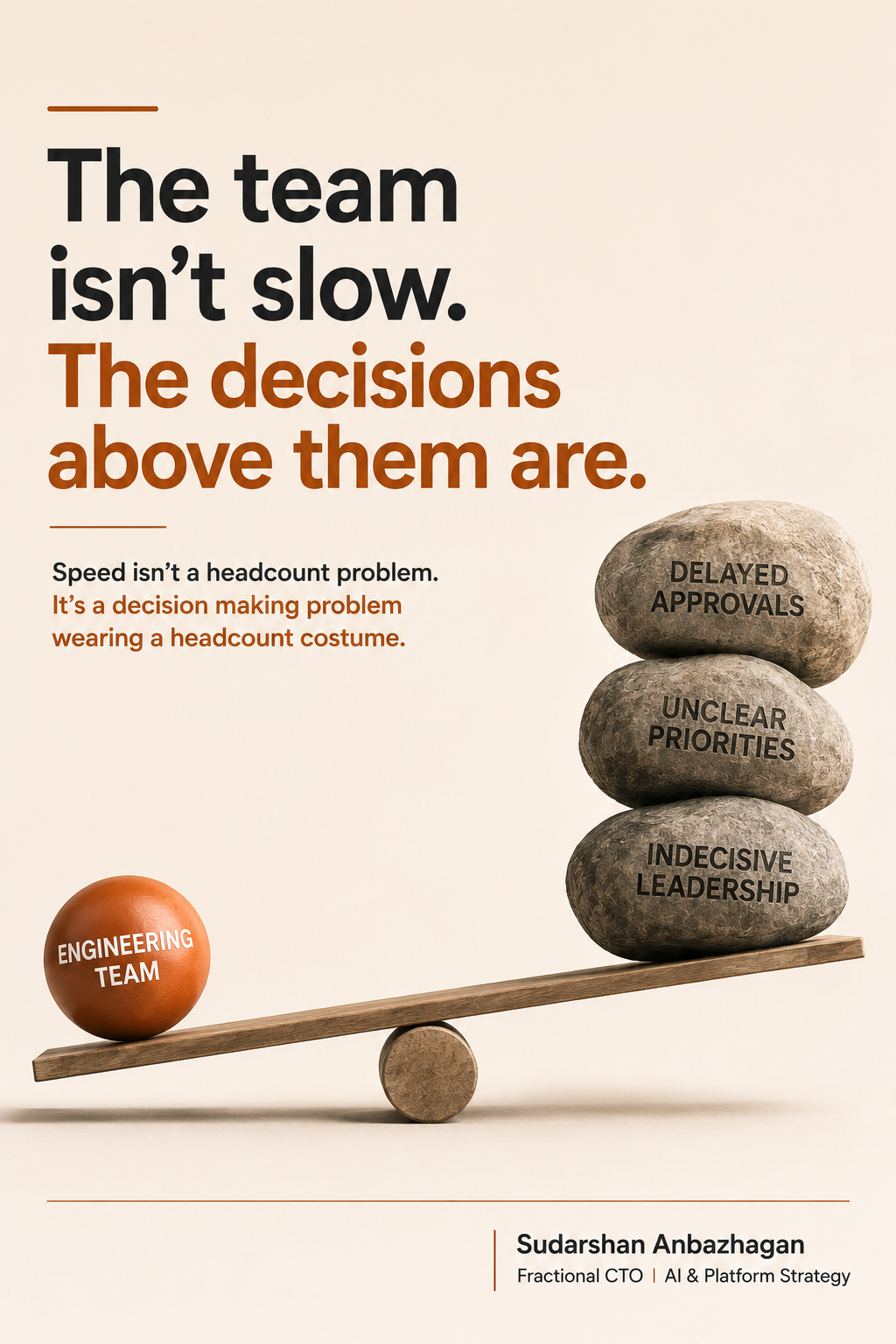
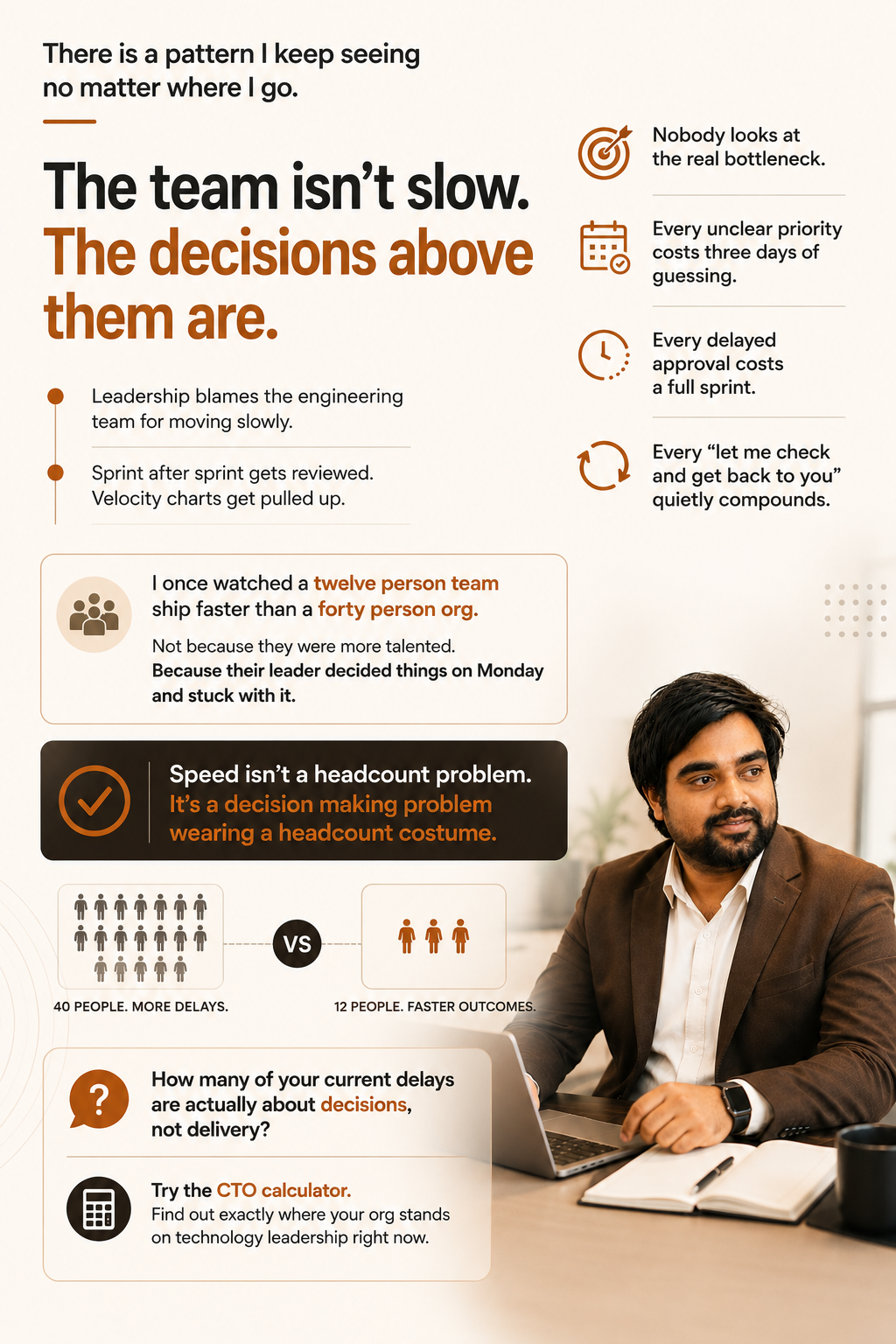
The comparison between managed teams vs legacy vendors is often framed around cost, but cost was never the most important variable. The organizations that actually break the hiring-delay pattern move to a model built around pre-assembled, cross-functional engineering pods rather than staffing individual roles one requisition at a time.
The numbers on a dedicated delivery pod look very different compared to what slow hiring actually costs over the same period.
→ Calculate Your Managed Team Cost
→ Read the Managed Teams Guide
| Dimension | Legacy Vendor Staffing | Managed Delivery Pod |
|---|---|---|
| Time to first sprint | Weeks to months per hire | Days to weeks, team pre-assembled |
| Ownership model | Individual contractors, fragmented accountability | One point of ownership across the pod |
| Handoffs | Multiple, role by role | Minimal, cross-functional by design |
Legacy vendor staffing solves for filling a single role at a time. A managed delivery pod solves for having a functioning team, with architecture, QA, and delivery leadership already calibrated to work together, ready before the roadmap deadline arrives rather than after it has already slipped.
Reducing Delivery Inconsistency in Cross-Geography Engineering Teams
Reducing delivery inconsistency in cross-geography engineering teams depends heavily on how a team is assembled in the first place. When individual specialists are hired independently, often across different time zones and different vendors, the coordination overhead alone can consume a meaningful share of the productive week. Every handoff between a newly hired frontend engineer, a separately sourced backend developer, and an independently contracted QA resource introduces friction that a pre-built pod avoids by design.
I have seen engineering organizations spanning US-Europe market targets and India-based delivery centres lose more time to internal coordination between freshly hired individuals than to the actual technical complexity of the work. A managed team, calibrated as a single cross-functional unit before the engagement starts, removes that coordination tax almost entirely, because the working relationships and communication patterns are already established before the first sprint begins.
Signals That Hiring Delay Is Quietly Driving Your Roadmap Slippage
- The business case for a feature was approved months before any engineer started meaningful work on it
- Sprint planning repeatedly references “once we’re fully staffed” as a blocking condition
- Competitors have shipped comparable features while your team was still completing interview loops
MLOps Pipelines, RAG Frameworks, and the Cost of Assembling Specialized Talent One Hire at a Time
The hiring-delay problem intensifies sharply for specialized technical domains. Finding a single engineer experienced in MLOps pipelines or RAG framework implementation can independently take months in a competitive talent market, and most roadmaps involving generative AI work depend on more than one such specialist working in coordination. Waiting to hire each one sequentially compounds the delay dramatically, because the pipeline cannot meaningfully start until enough of the specialized roles are filled simultaneously.
A dedicated engineering pod sidesteps this entirely by bringing pre-calibrated specialists as a unit rather than as a sequence of independent hires. The pod does not wait for a single missing role to complete a hiring funnel before starting meaningful work, because the team was assembled with the necessary specialization already in place from day one.
The roadmap does not have to wait for your next hire. The market window stays open only for the organizations that stopped treating team assembly as a sequential hiring exercise.
Odoo Views, React Native Infrastructure, and Why Pod Composition Matters Before Work Begins
Specific implementation decisions, such as configuring Odoo views for a client-facing operations dashboard or choosing React Native infrastructure for a cross-platform mobile build, depend on having the right combination of specialists already in the room together. When those specialists arrive on different timelines through independent hiring, the architecture decisions that should happen collaboratively in week one instead happen piecemeal, with each new hire re-litigating choices the previous partial team already made without them.
A managed team model avoids this because the pod arrives with its internal architecture conversation already resolved before client work begins. Operational ROI improvement, the outcome every roadmap is ultimately chasing, depends far more on this kind of upfront coordination than most leadership teams initially assume.
Why the First 30 Days of a Managed Team Determine the Rest of the Engagement
Cross-functional pods do not become effective simply because they were assembled together. They become effective because of what happens in the first month, when working norms, escalation paths, and decision authority get established before the pressure of a live deadline arrives. Organizations that skip this calibration window and expect a newly formed pod to perform at full velocity from day one are often disappointed, not because the model failed, but because the ramp-up period was compressed to zero.
The Three-Phase Pod Calibration Window applies here as directly as it does to internal teams. In the first phase, the pod and the client jointly map every recurring decision type, from code review standards to deployment cadence, and assign clear ownership. In the second phase, the pod runs a short trial sprint focused on low-risk work specifically to surface friction points before they show up in a client-critical deliverable. In the third phase, the working rhythm is locked and the pod moves to full-velocity delivery. Pods that go through this calibration consistently reach stable velocity within weeks rather than months, compared to pods thrown directly into high-stakes work without it.
This calibration period is also where 98% on-time release rate discipline gets built into the engagement structurally, rather than hoped for after the fact. Delivery predictability is not an accident of talent density. It is the product of a team that spent its first weeks establishing exactly how decisions get made before those decisions became urgent.
Process Automation for Ops Leaders: Why Team Structure Outperforms Individual Heroics
Process automation for ops leaders is frequently framed as a tooling problem, something solved by adopting the right platform. In practice, the tooling matters far less than whether the team using it has a coherent structure. I have watched organizations adopt sophisticated automation platforms and see almost no improvement in delivery speed, because the bottleneck was never the absence of automation. It was that too many people needed to touch a single task before it reached a decision, regardless of how automated the individual steps were.
A managed team built around clear ownership can use the exact same automation tooling and see delivery time cut meaningfully, simply because fewer people are required to move a task from start to finish. The advantage was never really about the technology stack. It has consistently been about how the team surrounding that technology stack is structured, and clear ownership over vague responsibility, every time.
This is directly relevant to operations leaders evaluating why two teams with access to identical tools can produce dramatically different delivery outcomes. The team with fewer handoffs, clearer ownership, and pre-established working norms will consistently outperform the team with more individually talented people but weaker structural coordination.
If Your Roadmap Started Tomorrow, Would Your Team Actually Be Ready
Business case signed off, budget approved, scope defined. Those three conditions feel like readiness, but they only describe intent. Readiness is a separate, distinct condition, and it depends entirely on whether the people needed to execute the work are already assembled, calibrated, and working together before the roadmap clock starts running.
Your roadmap does not have to wait for your next hire. Organizations that shift from sequential hiring to pre-assembled delivery pods consistently report a return to predictable sprint starts, because the single largest source of unplanned delay, the gap between approval and actual capacity, has been engineered out of the process entirely. That shift, more than any individual technology decision, is usually the fastest way to protect a market window that a competitor is currently racing to close.
What Leadership Should Ask Before the Next Headcount Request
The next time a roadmap slips and the instinctive response is to open another requisition, it is worth pausing on a more useful question first. Is this delay actually about missing talent, or is it about the sequencing of how that talent gets assembled. Those are two very different problems with two very different fixes, and conflating them is exactly how hiring delay keeps recurring quarter after quarter without ever getting formally addressed.
This distinction connects closely to what builds durable trust in technology leadership over time. Leaders who correctly diagnose sequencing problems as sequencing problems, rather than defaulting to headcount as the universal answer, consistently build organizations that ship on schedule without needing to constantly expand the team. The distinction between an offshore staffing arrangement and a genuine managed delivery pod comes down to exactly this kind of upfront structural thinking, not to geography or cost per hour.
Operational ROI improvement compounds fastest in organizations that treat team assembly as seriously as they treat architecture decisions. A pod that is structurally sound from week one will consistently outdeliver a larger, more expensive team assembled reactively, one urgent requisition at a time, precisely because the coordination cost of the reactive model quietly eats the advantage that additional headcount was supposed to provide.
Most teams that move to the pod model ask the same question afterward, why didn’t we do this a year ago.
→ Calculate Your Managed Team Cost
→ Read the Managed Teams Guide