Technology Decision Ownership: Why the Loudest Voice Is Running Your Roadmap
Without a real technology owner, decisions go to whoever speaks loudest, not the person with the clearest judgement. Here is how a Fractional CTO fixes it.
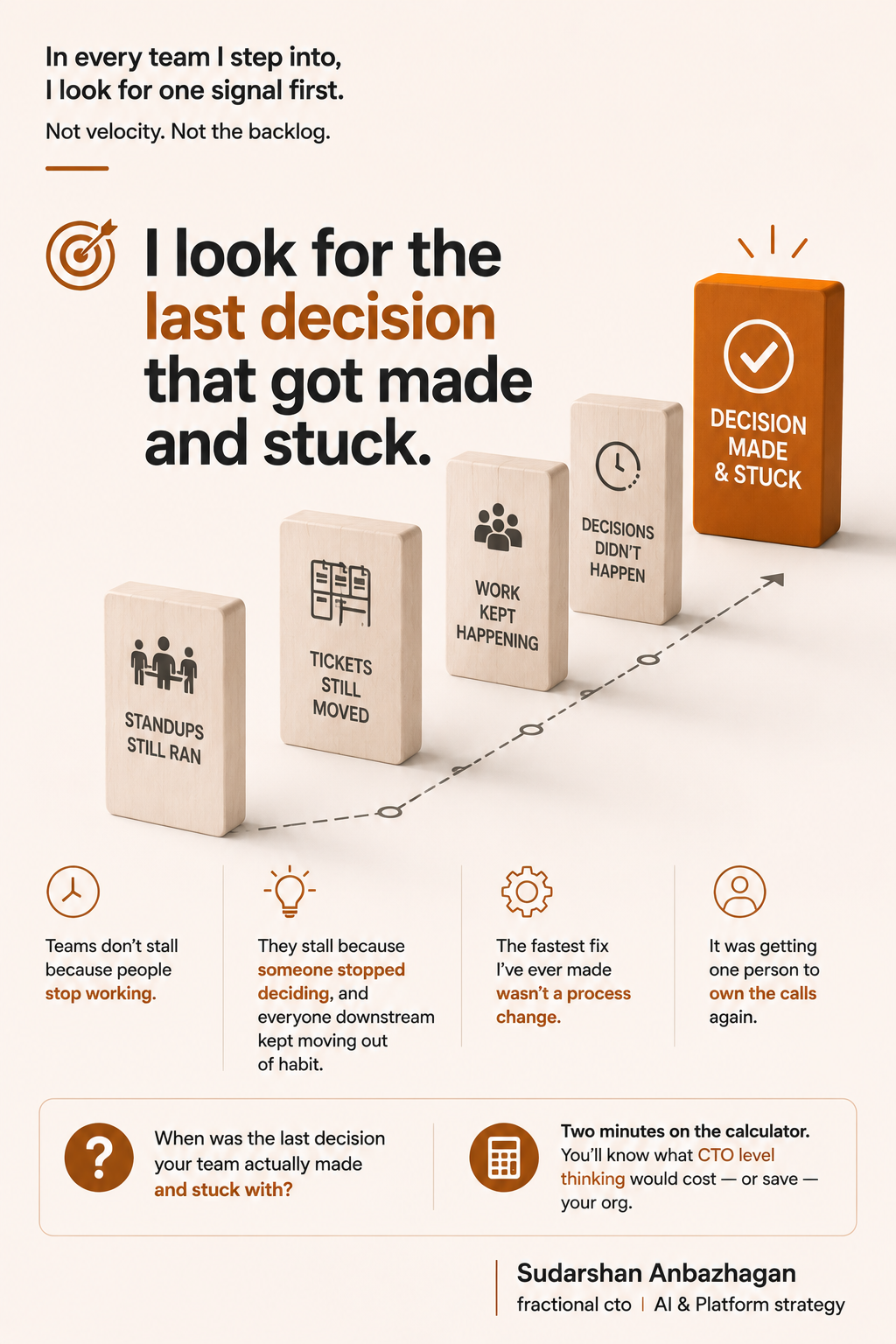
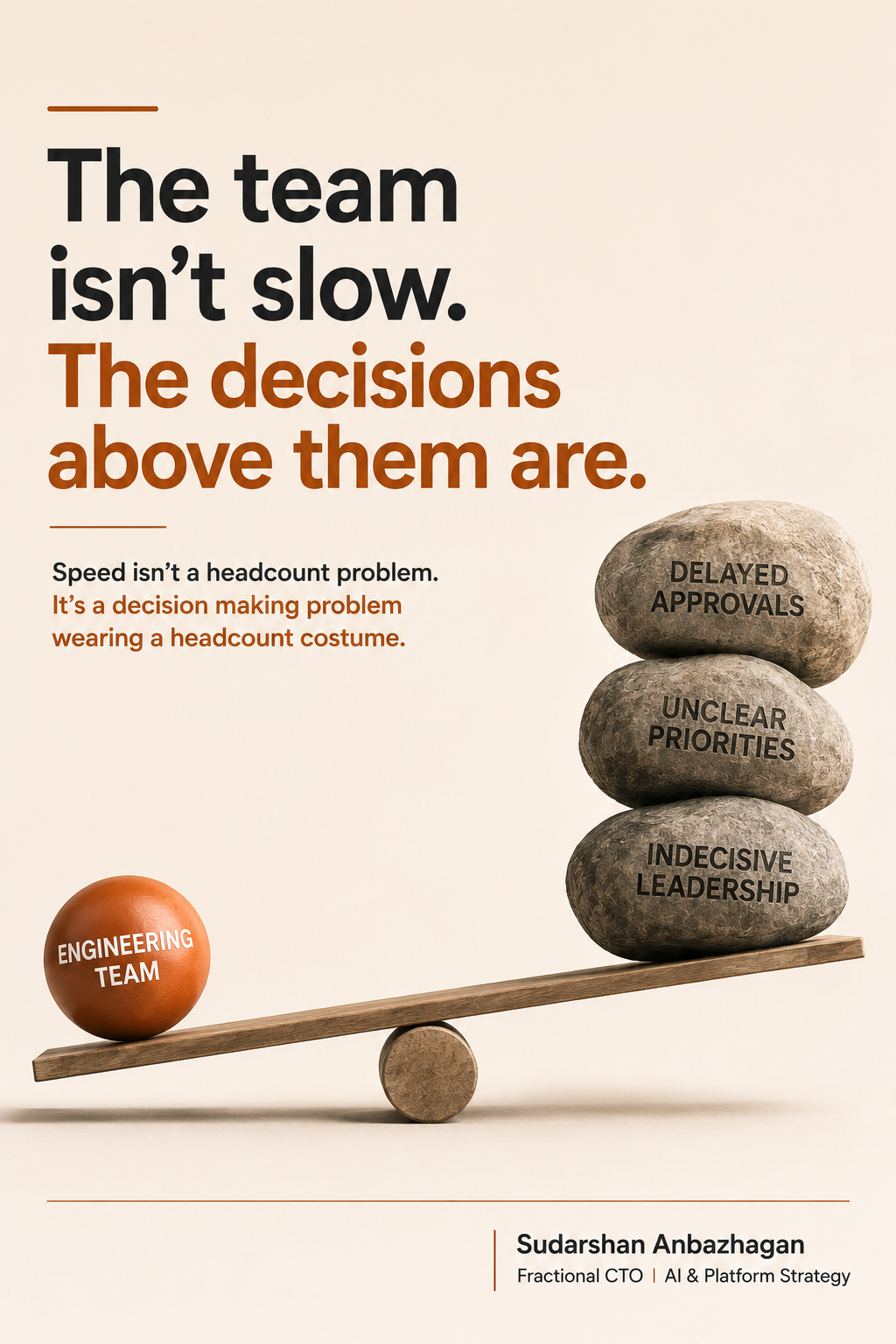
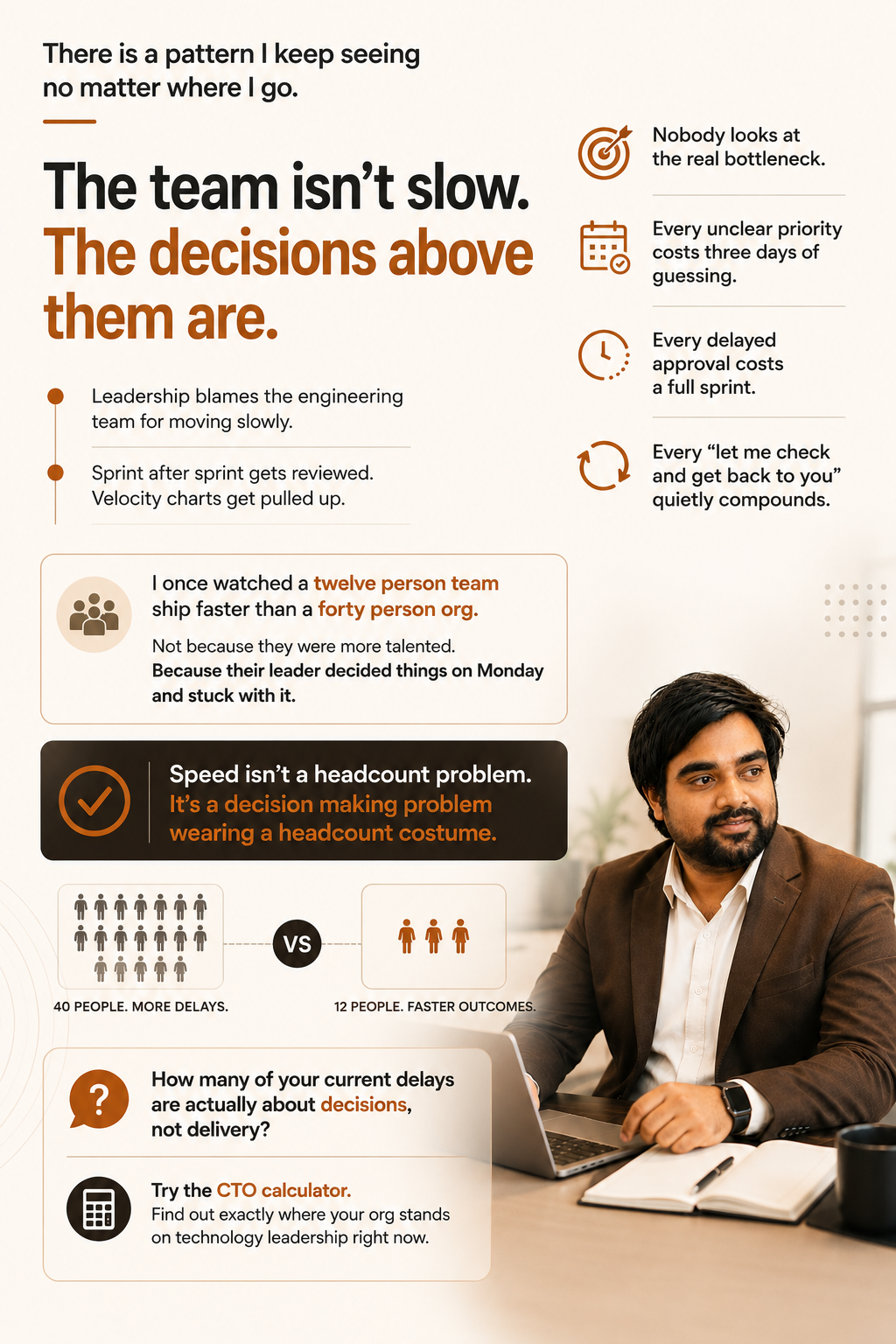
In every leadership team I have worked with, the same test reveals whether technology decisions are being made with judgement or with volume. I ask a simple question: who made the last hard technical call, and why did the room agree with them. In companies without a dedicated technology owner, the answer is rarely encouraging. Decisions do not go to the person with the clearest view of the tradeoffs. They go to whoever argued the loudest that week.
This is not a hypothetical risk. I have watched a sales leader override a legitimate security concern because they carried the strongest voice in that particular meeting. I have watched a founder greenlight an entire architecture direction because an investor mentioned it once in passing. Neither decision was wrong because the people involved were careless. It was wrong because nobody in the room had the standing, the context, or the mandate to say clearly what the technology could and could not support.
This gap has a name in most organisations, even if nobody says it out loud. It is technology decision ownership, and its absence is one of the most expensive blind spots a growing company can carry into its next funding round, its next enterprise client, or its next scaling phase.
Most leaders who have run this calculation are surprised by where the real cost sits.
→ Calculate Your Fractional CTO ROI
→ Read the Fractional CTO Guide
Why Volume Wins When Ownership Is Missing
Every leadership team makes technology-adjacent decisions constantly, whether or not a technologist is in the room. Which vendor to trust. Which architecture direction to commit budget toward. Which security tradeoff is acceptable given the timeline. When there is no single accountable technology voice, these decisions default to whoever has the most organisational leverage in that specific meeting, not the most relevant judgement.
Over time, this creates a pattern that is very difficult to detect from the inside. The company is still moving. Meetings are still productive. Decisions are still being made. But the decisions are increasingly disconnected from what the technology can actually deliver, because the person best positioned to flag that gap was never structurally empowered to speak first.
Volume-Driven Decisions vs Judgement-Driven Decisions
What Changes Once Someone Owns the Call
The fix is rarely more meetings or more process. In every engagement where I have stepped into this gap, the shift that mattered was much simpler: one person in the room became responsible for saying, clearly and early, what the technology could actually support before the discussion moved to consensus. That single structural change removed the need for volume to substitute for judgement.
Companies that get this right are not necessarily the ones with the biggest engineering teams. They are the ones where someone holds the mandate to interrupt a confident but technically unsound direction before it becomes a commitment. That mandate is exactly what a Fractional CTO is built to hold, without requiring the cost or timeline of a full-time senior hire.
The Real Cost of an Undefined Owner
The cost of this gap rarely shows up as a single dramatic failure. It shows up as a pattern of small, expensive reversals: an architecture choice that has to be undone eighteen months later, a vendor relationship that should never have been signed, a security posture that only gets fixed after a client audit flags it. Each one looked like a reasonable decision in the room where it was made. None of them would have survived a single accountable technology voice asking the right question first.
This is precisely why more growing companies are choosing a Fractional CTO model over waiting for the “right time” to make a full-time senior hire. The mandate to own technology decisions does not need to wait for headcount budget. It needs to exist from the moment the first six-figure technology decision is on the table.
The gap between a full-time CTO and a Fractional one is rarely what organisations expect before they see the numbers.
→ Calculate Your Fractional CTO ROI
→ Read the Fractional CTO Guide
Who Is Actually Making Your Technology Calls
If you strip away the org chart and just watch what happens in your next leadership meeting where a technology tradeoff comes up, the pattern will be obvious within minutes. Either someone with real technical judgement is expected to weigh in and is heard, or the loudest voice in the room is quietly running your roadmap without anyone having decided that on purpose.
Fixing this is not about hiring more people or holding more meetings. It is about deciding, deliberately, who holds the mandate to say what the technology can support, and giving that person the standing to say it before the room reaches consensus without them.
I write about this pattern often on LinkedIn, from the field, one engagement at a time.
🌐 sudarshananbazhagan.com
|
🔗 Connect on LinkedIn
Sudarshan Anbazhagan | Fractional CTO | AI & Platform Strategy | Founder & CEO, SuperBotics MultiTech