
What Companies Get Wrong About Hiring a Fractional CTO
The most common feedback I hear from companies that have had a Fractional CTO engagement that did not work is some version of this: “We expected a roadmap and a strategy within the first few weeks. Nothing came fast enough.” That expectation is understandable. It is also the reason the engagement failed. A Fractional CTO is not a faster version of a senior hire. The value of the model is not speed of initial output. It is the quality of direction that emerges from a genuine understanding of the real terrain of the business before anything is built on top of it.
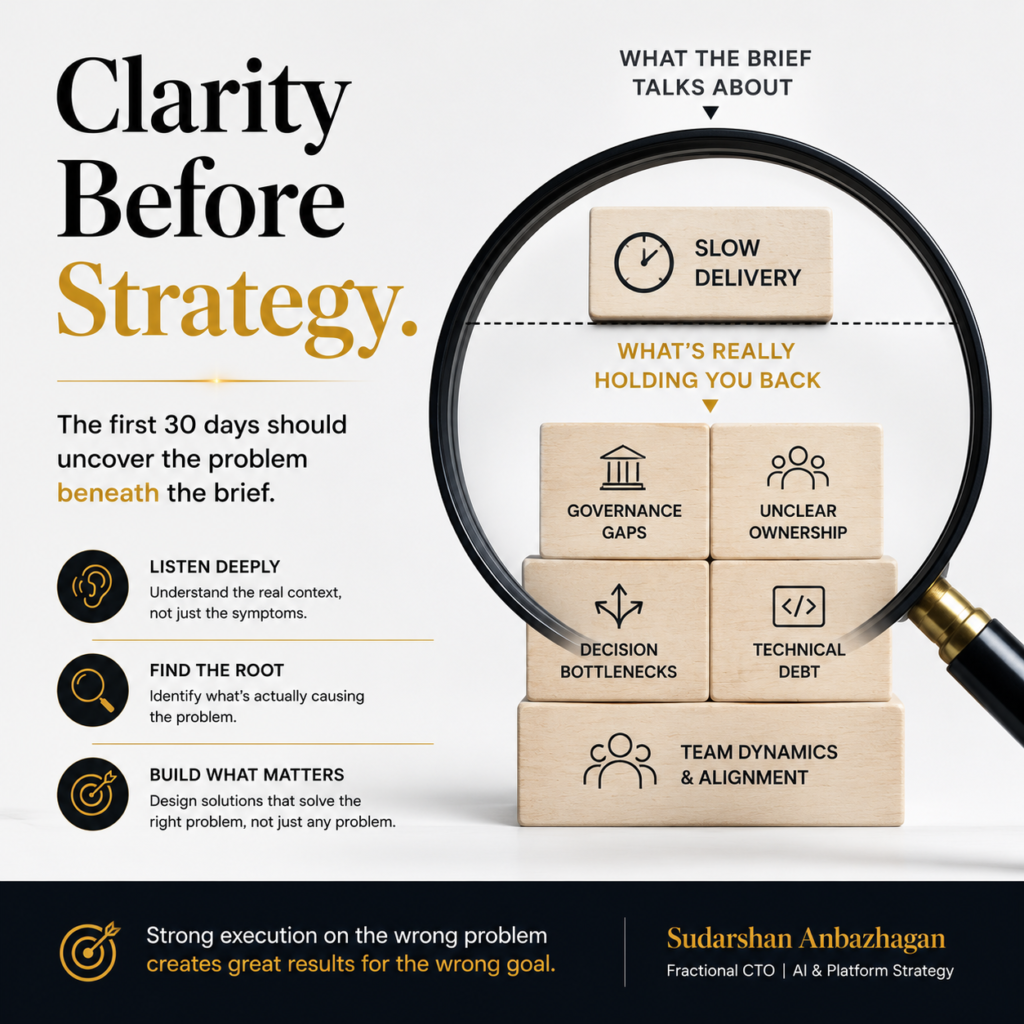
The first weeks are not about producing output. They are about understanding the reality of the business before making decisions about what to build. Where are the technical decisions already made that will constrain what is possible? Where is the team capable and where are they operating on assumptions that have not been tested recently? What is the actual business problem underneath the technology problem that made it into the brief? That work does not look like output. Which is why companies that measure the first thirty days on deliverables almost always reach the wrong conclusion about whether the engagement is working.
After fifteen years of working in this model through SuperBotics, I have seen the same two mistakes appear consistently in engagements that fail to reach their potential. They are not about talent selection or cultural fit. They are about the structure of expectations and the runway provided for the engagement to compound. Both are fully correctable if they are identified before the engagement is evaluated against the wrong criteria.
The Expectation Structure Problem: The Fractional CTO Value Curve
I use what I call the Value Curve Framework to set engagement expectations from day one. The Value Curve has three phases. Phase One, weeks one through four, is Diagnosis: visible output is minimal, understanding is being built, real problems are being surfaced beneath stated ones. Phase Two, months two through three, is Direction: the diagnosis is complete, clear priorities are set, the first meaningful decisions are being made with real context behind them. Phase Three, month four onward, is Compounding Delivery: the engagement is operating with full context, the direction is embedded in the team, and value accumulates at increasing velocity.
A Fractional CTO engagement evaluated at six weeks is measuring the map-reading, not the journey. The real value compounds from month two onward, because the work done in month one made month two possible.
| Phase | Timeline | What It Looks Like | What It Produces |
|---|---|---|---|
| Diagnosis | Weeks 1–4 | Conversations, observation, system review | Real problem identification, constraint map |
| Direction | Months 2–3 | Priority setting, team alignment, first decisions | Grounded roadmap, team clarity, quick wins |
| Compounding | Month 4+ | Full context delivery, proactive leadership | Accelerating value, team development, strategic contribution |
The Runway Problem
The second mistake is not protecting enough runway. A Fractional CTO engagement starts compounding real value at around ninety days, when the diagnosis is complete and the direction has been set with genuine understanding behind it. Evaluating the engagement at six weeks is measuring the diagnostic phase as if it were the delivery phase. It is the equivalent of evaluating a surgical procedure by the quality of the anaesthesia. The anaesthesia is necessary. It is not the point.
Organisations that structure a Fractional CTO engagement with an implicit six-week evaluation point, even when the formal agreement is longer, create conditions that undermine the model they are paying for. The Fractional CTO, sensing that they are being evaluated on early output, shifts toward producing visible deliverables rather than completing a thorough diagnosis. The diagnosis is compressed. The direction is set on incomplete information. The compounding phase that follows is built on a weaker foundation. The engagement delivers less than it would have if the evaluation pressure had been held off long enough for the model to work.
What a Well-Structured Engagement Actually Looks Like
In the engagements at SuperBotics that have produced the most durable value, the client organisation came in knowing they were buying clarity before they were buying output. They had explicitly discussed the diagnostic phase with their internal stakeholders and had created space for the first four weeks to be measured on the quality of understanding produced rather than visible deliverables. They had a named internal counterpart whose role was to facilitate access and context during the diagnostic, not to manage the output of it.
And they had protected a genuine ninety-day runway before any formal evaluation of the engagement occurred. Not because they were incurious about progress. They received regular updates and were deeply engaged with the work. But the formal question of whether the engagement was delivering value was held open until the model had had time to complete its first full cycle. The organisations that structure the engagement this way consistently describe the outcome as one of the highest-value technology investments they have made.
The Internal Counterpart Requirement
One structural element that is consistently present in high-performing Fractional CTO engagements is a named internal counterpart who is senior enough to provide access to real information and politically invested enough in the outcome to protect the diagnostic process from the organisational pressures that would otherwise compress it. This person is not a project manager. They are an executive sponsor who understands that the first thirty days are about building understanding and treats the access they provide to the Fractional CTO as a strategic investment rather than a management overhead.
When this person does not exist, the diagnostic phase is almost always compromised. Access to the people closest to the work is filtered. Conversations are scheduled through administrative channels rather than directly. The Fractional CTO receives a curated view of the organisation rather than the real one, and the direction that emerges from the diagnostic is built on a partial picture. The internal counterpart requirement is not bureaucratic. It is the structural condition that makes the diagnostic produce its best work.
If your organisation is considering a Fractional CTO engagement, the most important preparation you can do is internal. Ensure the evaluation framework is aligned with the Value Curve. Protect the diagnostic phase from premature output pressure. And identify the internal counterpart who will make the engagement possible. More on Fractional CTO engagements and technology leadership on this blog.