Nobody Actually Wants AI. They Want Decisions Made Faster
Most AI conversations are really about decision speed, not technology. Here is why technology leadership determines whether AI adoption actually pays off.
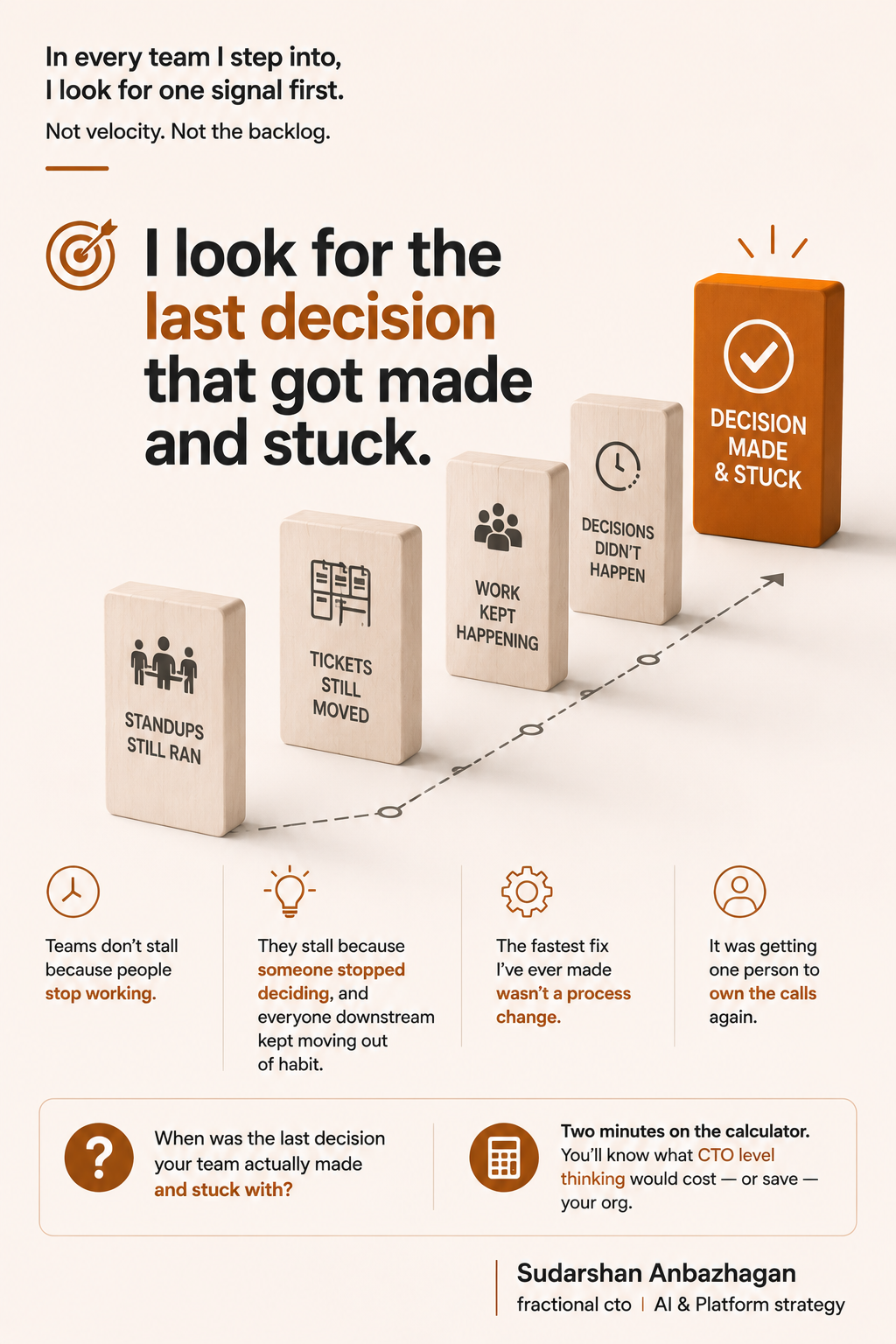
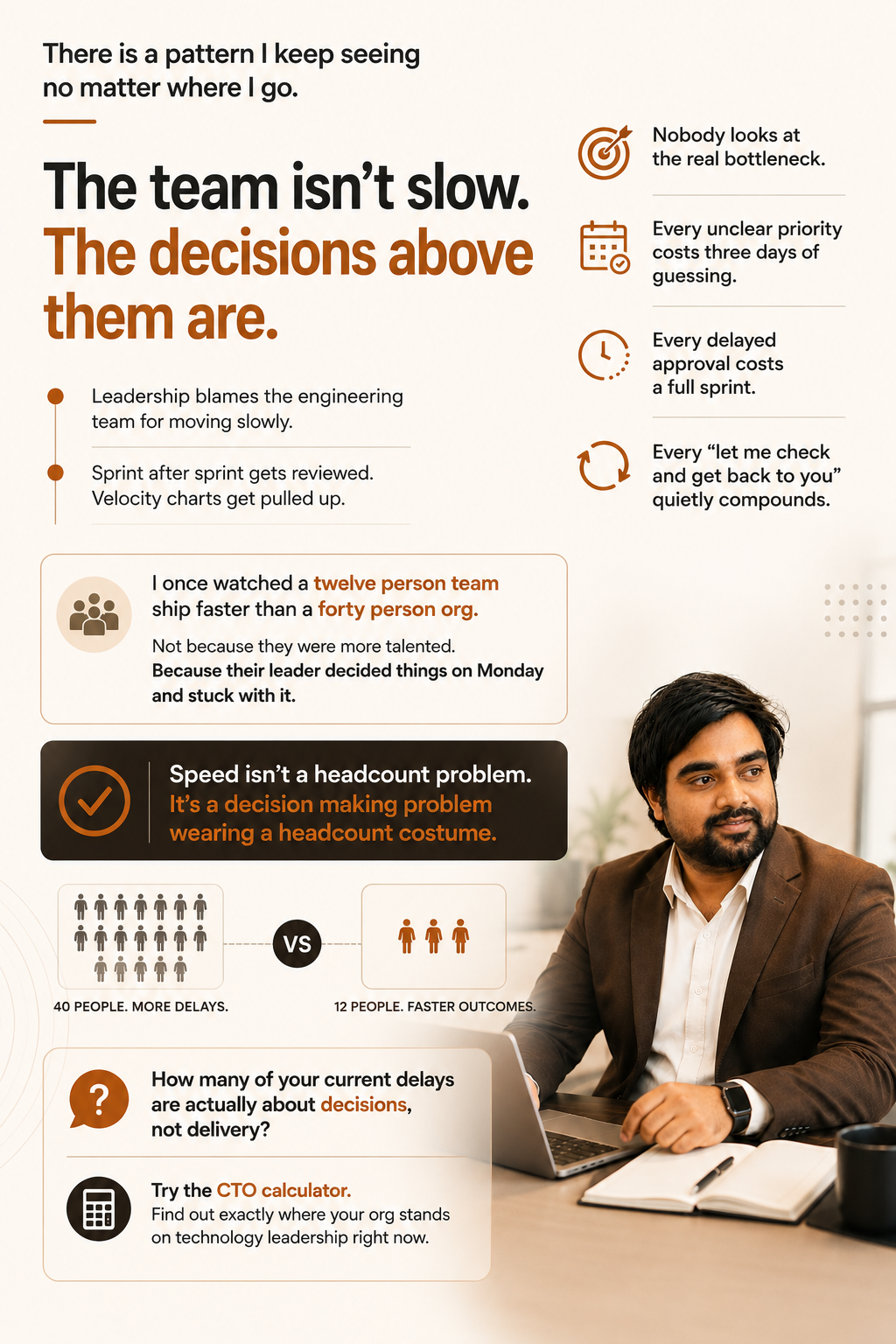
I used to think the hardest part of guiding a company through technology change was the technology itself. Almost every AI conversation I walk into now confirms something different. Leaders do not actually want “AI” as a checkbox on a strategy deck. What they want is the decision that used to take three weeks to take three days, or the answer that used to require five people in a room to be available in minutes instead.
AI is simply the current vehicle for that ask. The underlying request, the one leadership is rarely saying out loud, is always speed of decision-making. That distinction changes almost everything about how an AI initiative should be scoped, resourced, and evaluated.
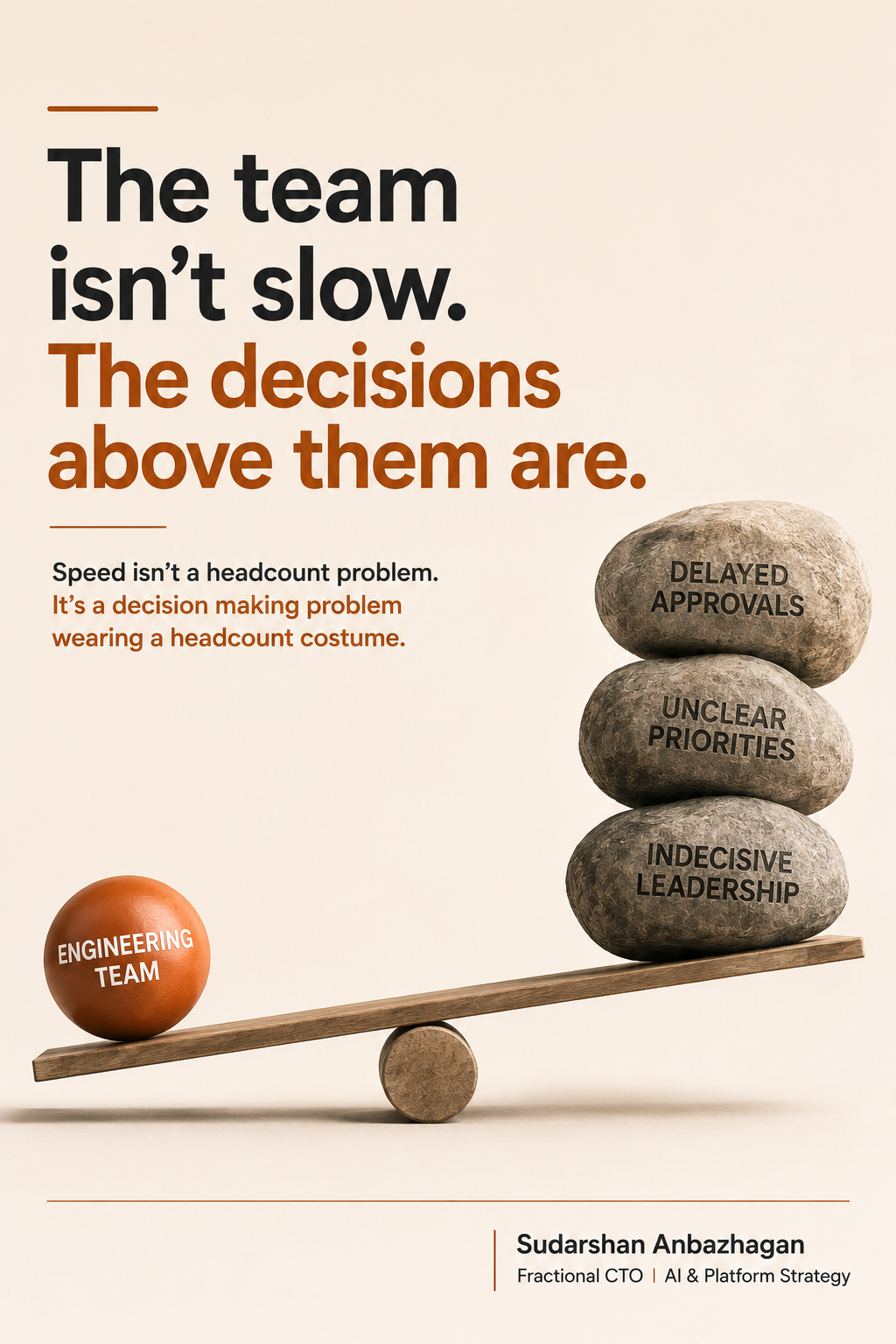
Speed of decision-making is exactly what technology leadership exists to deliver. Without someone accountable for that judgement sitting inside the AI conversation, AI pilots tend to add noise faster rather than clarity, because more information moving quickly is not the same thing as better decisions being made quickly.
Most leaders who have run this calculation are surprised by where the real cost sits.
→ Calculate Your Fractional CTO ROI
→ Read the Fractional CTO Guide
Why Most AI Pilots Miss the Actual Goal
The typical AI pilot starts with a tool and a use case, then works backward to a business justification. That sequencing produces plenty of activity and very little durable value, because it never asks the one question that actually determines success: which specific decision, made faster, would change our next quarter. Without that anchor, an AI rollout measures adoption and usage instead of the business outcome it was supposed to accelerate.
This is where a Fractional CTO earns their place in the conversation before the first tool is selected, not after the first disappointing pilot result comes in.
AI Rollout Without Leadership vs AI Rollout With Technology Leadership
The Reframe That Changes Everything
With a Fractional CTO in the room, the question changes from where can we use AI to which decision, made faster, changes our next quarter, and someone owns getting it there. That reframe alone is usually worth more than the AI tool itself, because it forces the organisation to name a specific, measurable outcome before a single dollar goes toward tooling or integration work.
This is not a dismissal of AI as a genuine lever. It is a recognition that the lever only works when someone with technology and business judgement is deciding where to apply it.
What This Looks Like in Practice
In engagements where this reframe has been applied early, the AI conversation stops being about which vendor to trial and starts being about which recurring decision bottleneck is costing the business the most time every month. That single shift changes vendor selection, changes the pilot’s success criteria, and changes how the board evaluates whether the investment is working.
The tool matters far less than the discipline applied before the tool is chosen.
The gap between a full-time CTO and a Fractional one is rarely what organisations expect before they see the numbers.
→ Calculate Your Fractional CTO ROI
→ Read the Fractional CTO Guide
What Decision Are You Actually Trying to Speed Up
If you stripped away the word AI from your current strategy conversations entirely, what decision are you actually trying to speed up, and who owns making that happen. That question, asked honestly, usually does more to clarify an AI roadmap than any vendor comparison ever could.
Technology leadership is what turns that question into an actual plan, rather than another slide in a deck about the future of the company.
I write regularly about where AI strategy actually breaks down. More of that thinking is on LinkedIn.
🌐 sudarshananbazhagan.com
|
🔗 Connect on LinkedIn
Sudarshan Anbazhagan | Fractional CTO | AI & Platform Strategy | Founder & CEO, SuperBotics MultiTech