
Delivery Did Not Slow Down, Someone Stopped Deciding
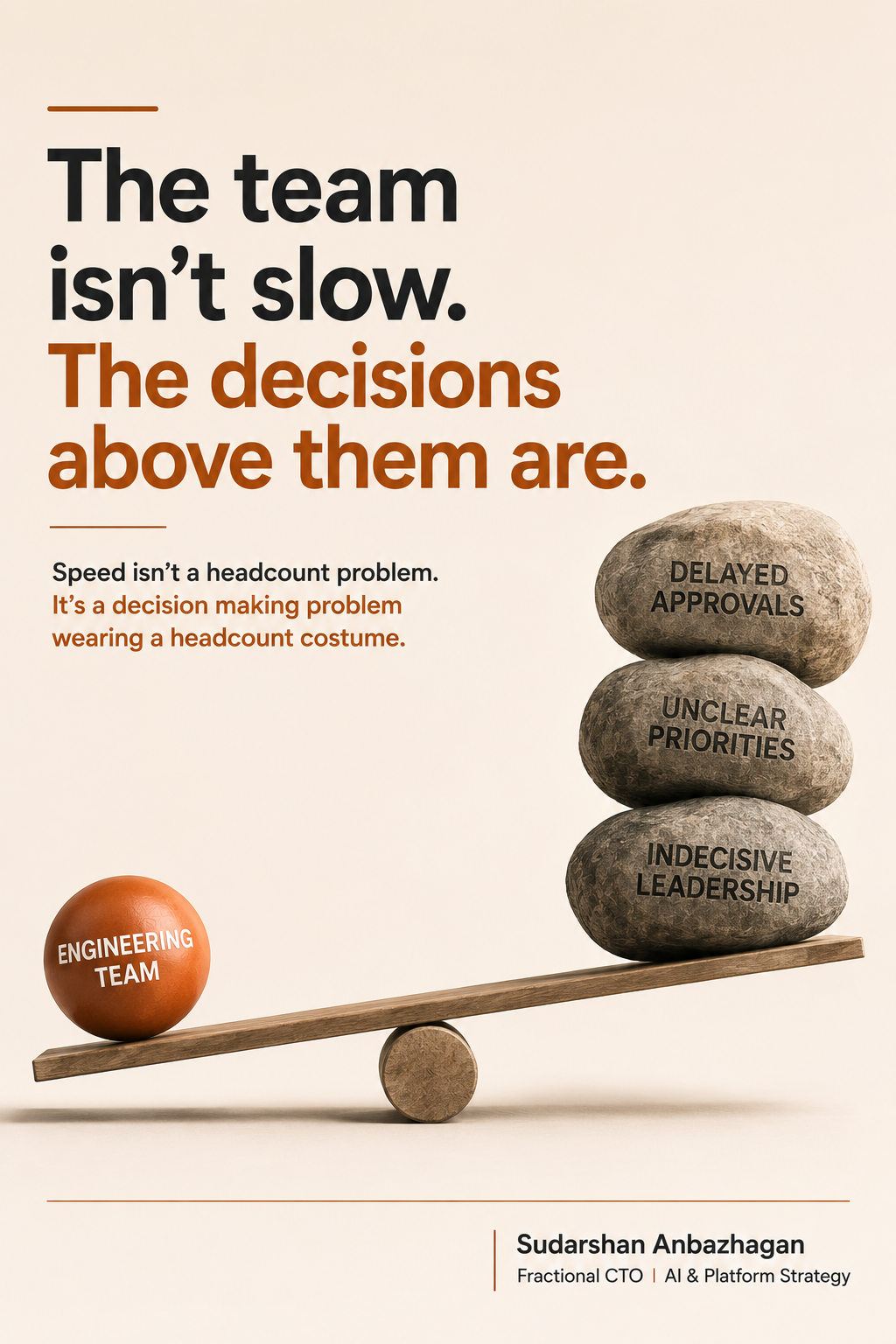
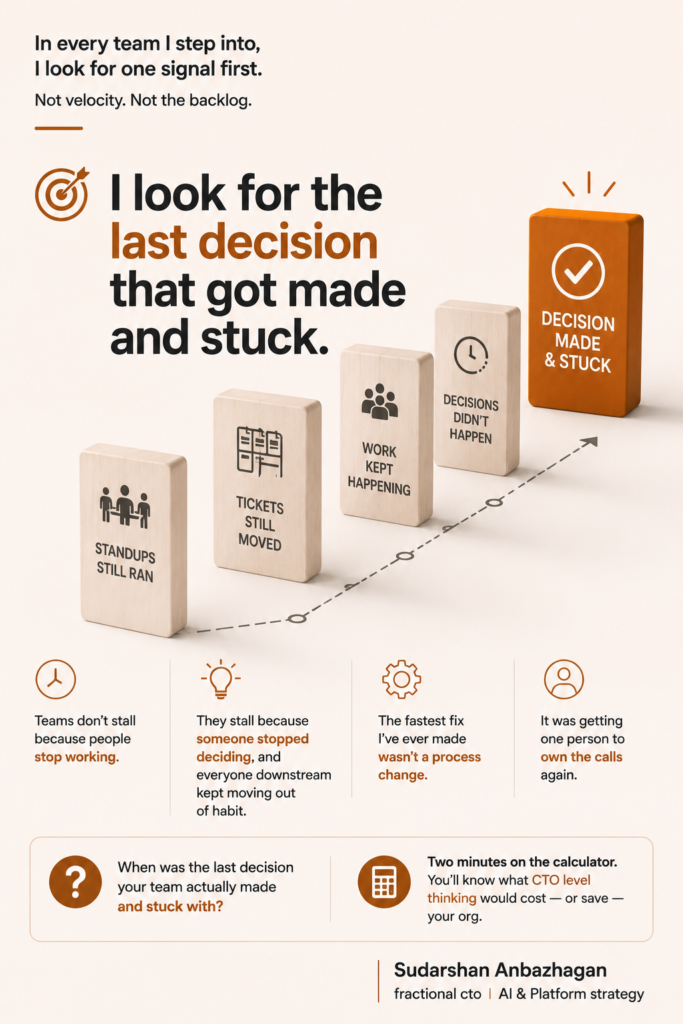
In every team I step into, I look for one signal before anything else. Not velocity charts, not the size of the backlog, not the sprint burndown that leadership usually pulls up first. I look for the last decision that got made and actually stuck. Sometimes that decision was three weeks ago. Sometimes it was three months ago. Everything that happened in between was rarely delivery slowing down in any technical sense. It was decisions quietly failing to happen while the rest of the organisation kept moving out of habit.
Standups still ran on schedule during this period. Tickets still moved across the board from one column to the next. From a distance, the team looked healthy and productive. But the calls that actually mattered, which feature ships first, which technical debt finally gets paid down, which customer request gets declined rather than indefinitely deferred, those sat untouched for weeks at a time.
Teams Do Not Stall Because People Stop Working
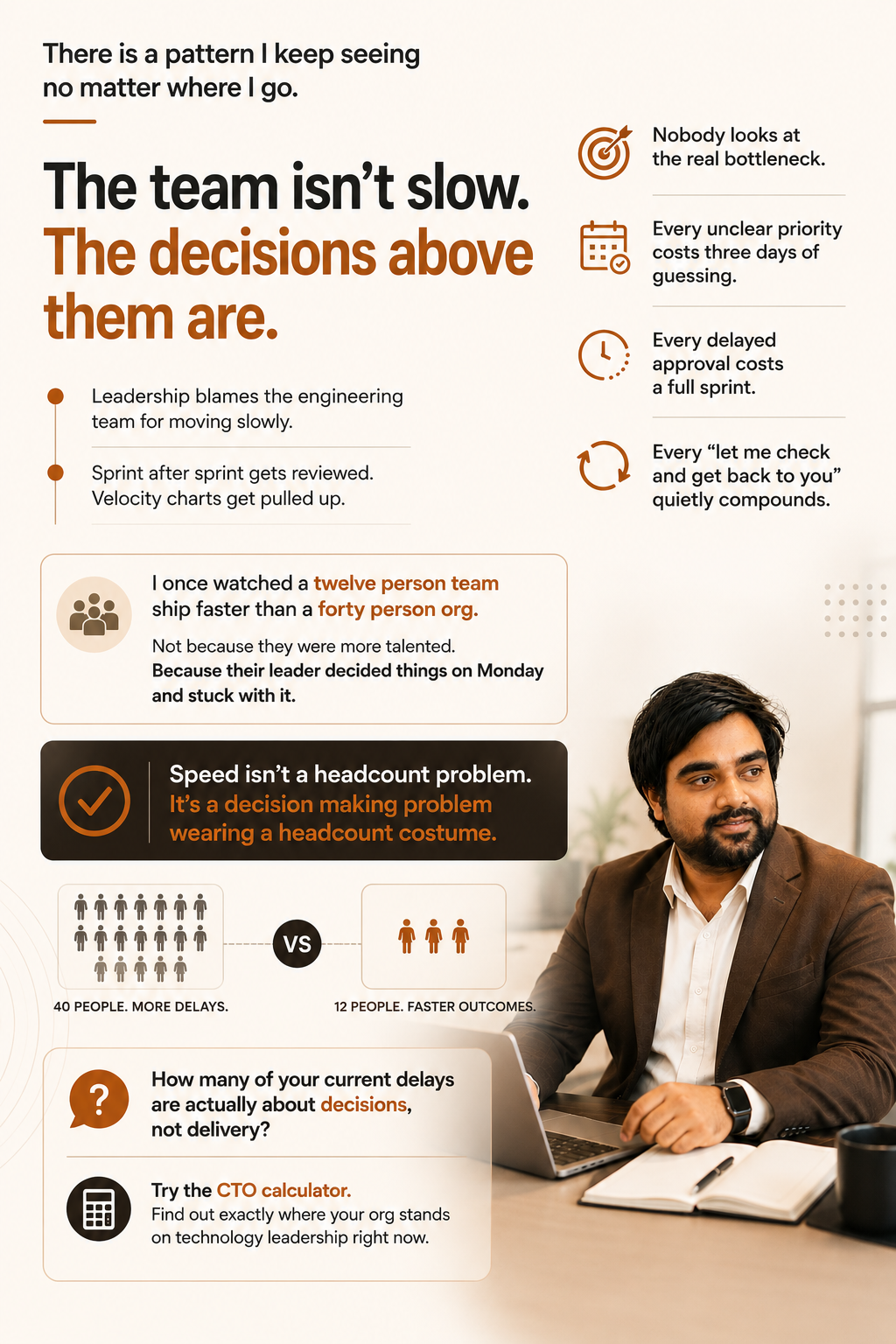
The instinct in most leadership meetings is to assume a stalled roadmap means the team has stopped working hard enough. In our engineering reviews across SuperBotics’ 500+ successful deployments, that assumption is wrong far more often than it is right. Teams stall because someone stopped deciding, and everyone downstream of that missing decision kept moving anyway, out of momentum rather than direction. Work still gets produced. It simply stops accumulating toward anything that matters, because nobody confirmed which direction it should accumulate toward.
This distinction matters because the fix for a team that has stopped working looks completely different from the fix for a team that is working hard in the absence of a decision. Adding headcount, running more retrospectives, or tightening the sprint cadence will not resolve a decision vacuum. It will simply generate more busy work inside the same unresolved ambiguity.
The fastest fix I have ever made in an engagement was not a process change. It was getting one person to own the calls again, and to keep owning them past the first uncomfortable pushback.
Two minutes on the calculator. You will know what CTO level thinking would cost, or save, your org.
→ Calculate Your Fractional CTO ROI
→ Read the Fractional CTO Guide
How to Find the Decision That Stopped
Finding the stalled decision is rarely difficult once someone knows to look for it. Ask any three people on a team what the current top priority actually is, and if the answers do not match, that mismatch usually traces back to a decision that was never formally closed out. Ask when the last significant trade off was resolved rather than reopened, and count the weeks since that happened. In organisations where this pattern has taken hold, that number is almost always longer than anyone in leadership expects.
- A feature prioritisation call that was made in a meeting but never confirmed in writing, leaving room for it to quietly unravel
- A technical debt item that everyone agrees needs attention but nobody has scheduled, because scheduling it means saying no to something else
- A customer request sitting in a grey zone between yes and no for so long that the customer has stopped expecting an answer
What Decision Debt Costs That Technical Debt Does Not
Technical debt is visible in code review and in system architecture diagrams. Decision debt is invisible in almost every artifact a team produces, which is exactly why it accumulates for so much longer before anyone notices the cost. A team can carry unresolved decisions for months while every individual metric, story points completed, tickets closed, code review turnaround, continues to look perfectly healthy.
| Debt Type | Visibility | Typical Discovery Point |
|---|---|---|
| Technical debt | Visible in code and architecture reviews | During refactors or incident postmortems |
| Decision debt | Invisible in day to day metrics | Only when a quarter ends with nothing to show for it |
The organisations that catch decision debt early are the ones that build a habit of asking, at the start of every planning cycle, which decisions from last quarter never actually got closed. That single question surfaces the gap long before it shows up as a missed quarterly target.
Getting the Decisions Moving Again
Resolving this rarely requires a new framework or a heavier process. It requires one person with the standing and the technical judgement to make the call, communicate it clearly, and hold the line when it gets challenged a second or third time. That is precisely the role a Fractional CTO plays inside organisations where no single person previously had the authority or the bandwidth to own that layer of the business.
Once that ownership exists, teams that looked stalled for months often move quickly again within a matter of weeks, not because anyone worked harder, but because the decisions that were quietly blocking them finally got made and stayed made. The question worth sitting with is not whether the team is working hard enough. It is whether there is a decision right now that everyone can see sitting unresolved, and nobody is currently the one moving it forward.
Most leaders who have run this calculation are surprised by where the real cost sits.
→ Calculate Your Fractional CTO ROI
→ Read the Fractional CTO Guide