
The Approval Queue Problem: Why Technology Leaders Become the Bottleneck They Are Trying to Prevent
I thought I was the bottleneck. I was actually the approval queue, and for a long time I did not understand the difference between those two things. It is a distinction that sounds small until you realise it changes everything about how you fix the problem, because you cannot fix a queue by working harder inside it.
For years earlier in my career, I believed every project in my organisation was waiting on my judgment. I was reviewing, approving, signing off, and I assumed that volume of activity meant I was the load-bearing decision point the business genuinely needed. It felt important. It felt indispensable. What it actually was, once I looked closely, was a calendar problem wearing the costume of a judgment problem.
The teams were not waiting on my expertise. They were waiting on my availability, and those are not the same constraint, even though they look identical from inside a packed calendar.
The Day the Queue Revealed Itself
The moment this became undeniable was the day I built clear thresholds for what actually needed my direct sign-off versus what a competent team member could decide within an established boundary. Half my urgent queue vanished overnight, not because the work stopped, but because most of it had never actually needed me. It needed a decision, and I had simply been the default place decisions went, by habit rather than by necessity.
I was not making better decisions by reviewing everything that crossed my desk. I was making delivery slower, one signature at a time, while quietly telling myself that thoroughness was the same thing as leadership. It rarely is, past a certain threshold, and most senior leaders cross that threshold without noticing.
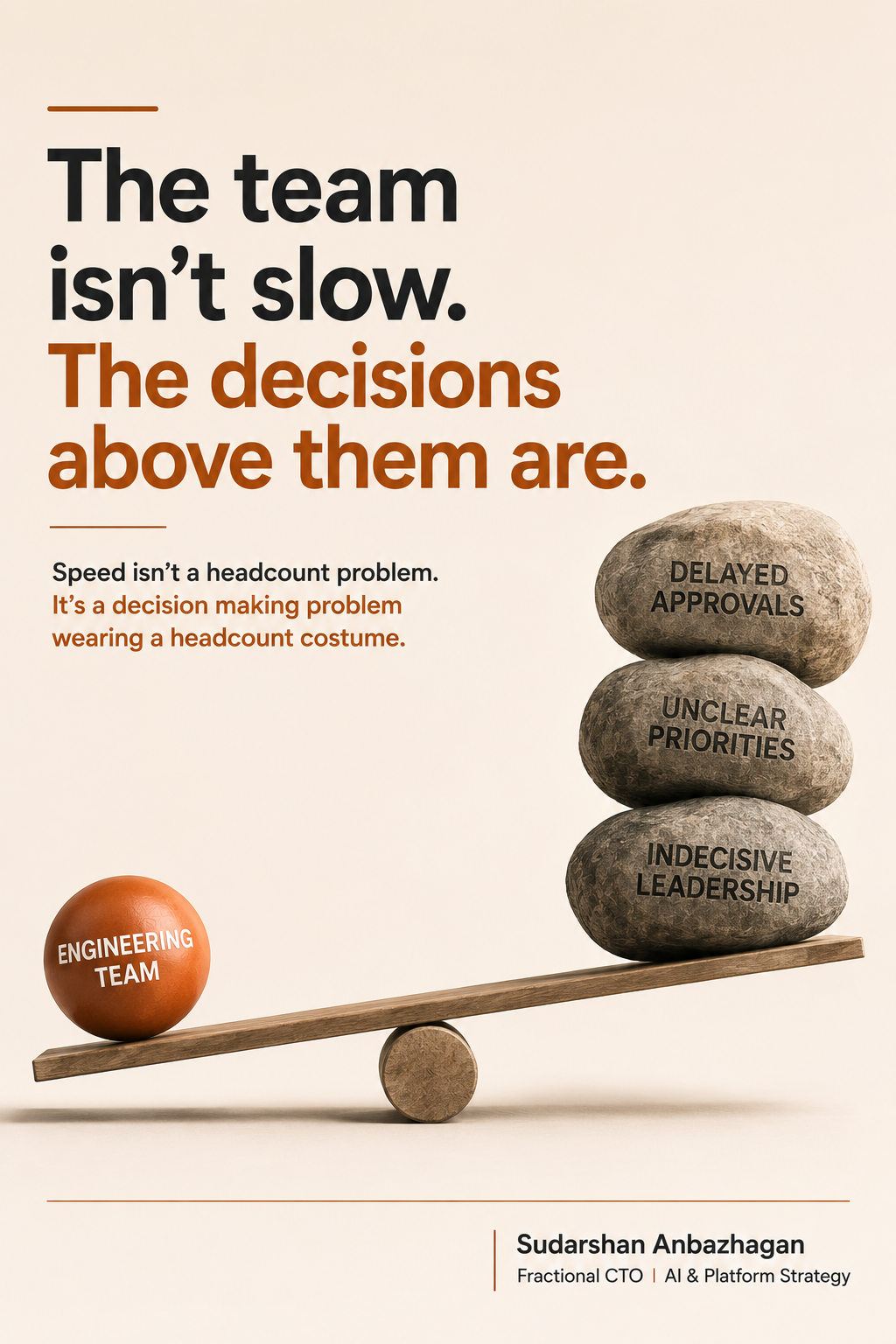
Most senior leaders think they are the bottleneck because of their expertise. In nearly every engagement I have reviewed since, the actual constraint was their unavailability, not their judgment, and those two diagnoses require completely different fixes.
Why This Pattern Is So Hard to See From the Inside
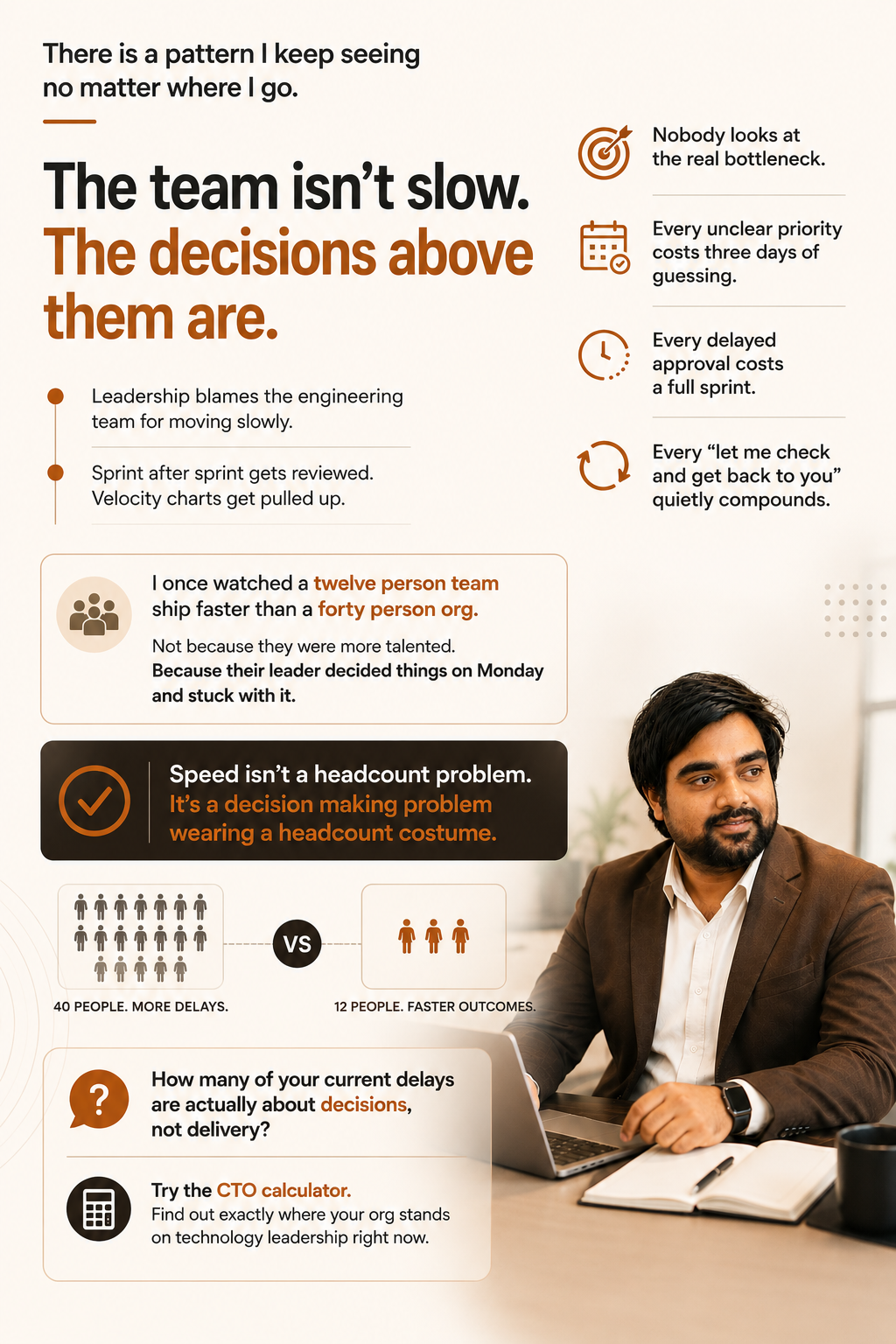
Decision debt is invisible in standup the same way technical debt is invisible in a demo. The team stays busy. Tickets move across the board. Everything looks like healthy momentum right up until someone asks how long a decision actually took to travel from question to answer, and the number surprises everyone in the room, including the leader who caused it.
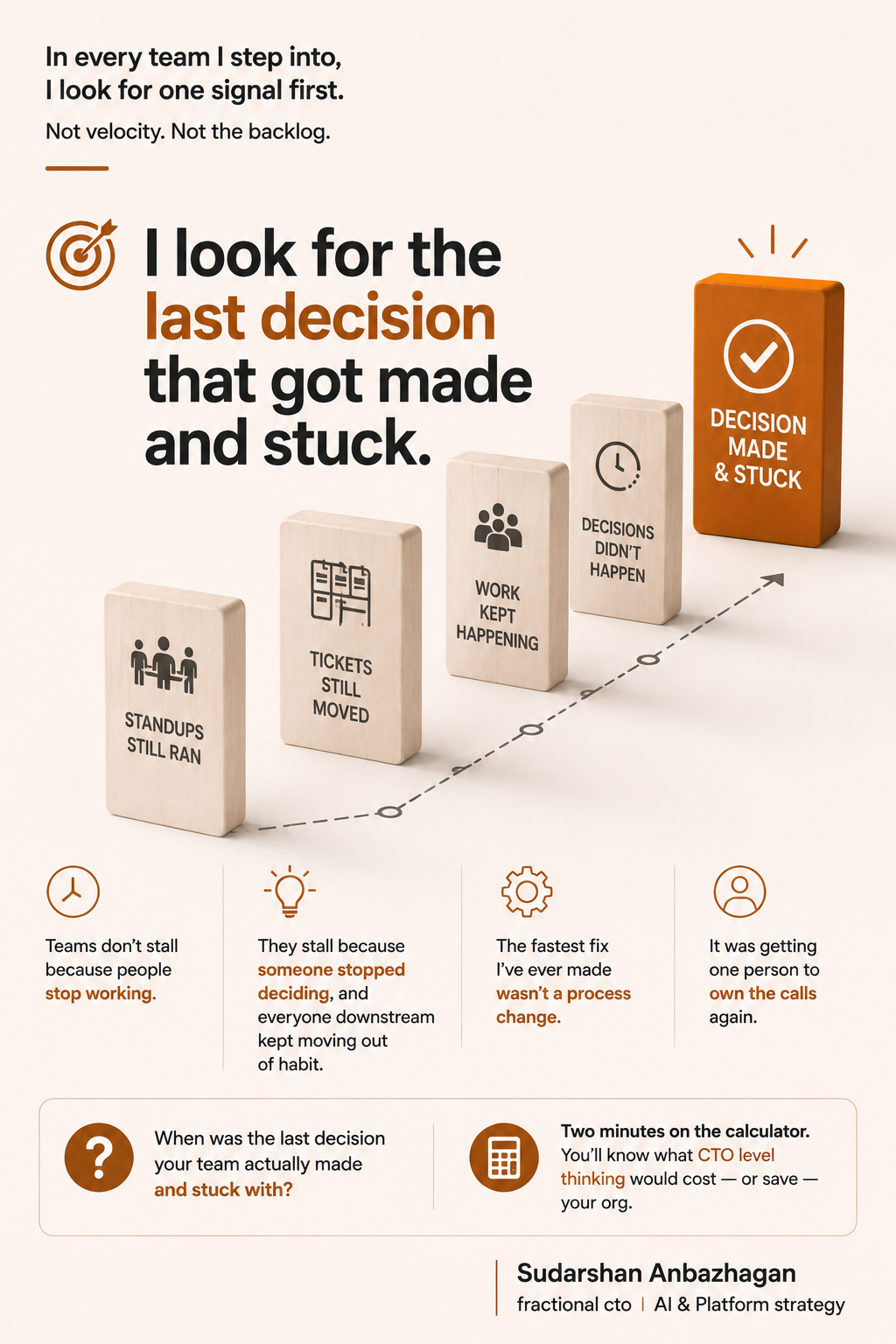
I ask one question in almost every engagement now: who made the last hard decision, and when. Most of the time, the room goes quiet, not because nobody remembers, but because the honest answer reveals that decisions have been queuing behind one person’s calendar for weeks, and nobody had a mechanism to name that as the actual constraint.
The Three-Tier Threshold Framework
The fix that worked, and the one I now build into every engagement early, sorts decisions into three tiers before any project starts, so the queue never forms in the first place.
| Tier | Decision Type | Who Decides |
|---|---|---|
| Tier 1 | Reversible, low cost, within an established pattern | Team lead, no sign-off required |
| Tier 2 | Moderate cost or sets a new precedent | Team lead with documented rationale shared upward |
| Tier 3 | High cost, irreversible, or cross-functional impact | Senior leader, direct sign-off required |
The failure mode I see most often is treating every decision as Tier 3 by default, because that feels safer in the moment. A five-hundred-dollar tooling call should never wait behind the same queue as a five-hundred-thousand-dollar infrastructure decision. Same queue, wildly different risk, and that mismatch is the actual leak, not the existence of a review process itself.
Run the numbers on your approval queue. See how much delivery time your org is actually losing to it.
→ Calculate Your Fractional CTO ROI
→ Read the Fractional CTO Guide
How to Build the Thresholds Without Slowing Down Governance
The instinct when someone hears “fewer approvals” is to worry about losing control. That is a reasonable worry, and the answer is not removing oversight, it is redesigning where oversight sits. In our engineering reviews across SuperBotics’ 500+ successful deployments, the organisations that get this right build the threshold framework once, review it quarterly, and trust it in between, rather than re-litigating every decision’s tier in the moment it arrives.
- Audit the last thirty decisions that crossed the senior leader’s desk and tag each one by actual cost and reversibility, not by how urgent it felt at the time.
- Identify which of those decisions could have been made confidently one level down, with a documented rationale shared afterward rather than approval sought beforehand.
- Set the three-tier thresholds explicitly, in writing, and communicate them to every team lead so nobody defaults to escalation out of caution.
- Review the thresholds every quarter, because what qualifies as Tier 3 risk changes as the team’s track record and the business context evolve.
What Changes Once the Queue Clears
Fixing the queue does not just speed up delivery. It changes what the senior leader’s time is actually spent on, moving it away from reactive sign-offs and toward the judgment calls that genuinely require their specific experience, the ones no threshold framework can delegate away. That reallocation is often the real unlock, more than the speed gain itself.
If your team is waiting on you right now, the honest question worth asking is whether it is your judgment they actually need, or simply your signature on something a documented threshold could have cleared days ago.
Fix the queue. Not the person stuck in it.
→ Calculate Your Fractional CTO ROI
→ Read the Fractional CTO Guide
This same decision debt shows up in a different form in what builds trust in a technology leader over the long term, which is worth reading alongside this piece.