
What Is Quietly Changing Inside High-Performing GCCs Right Now
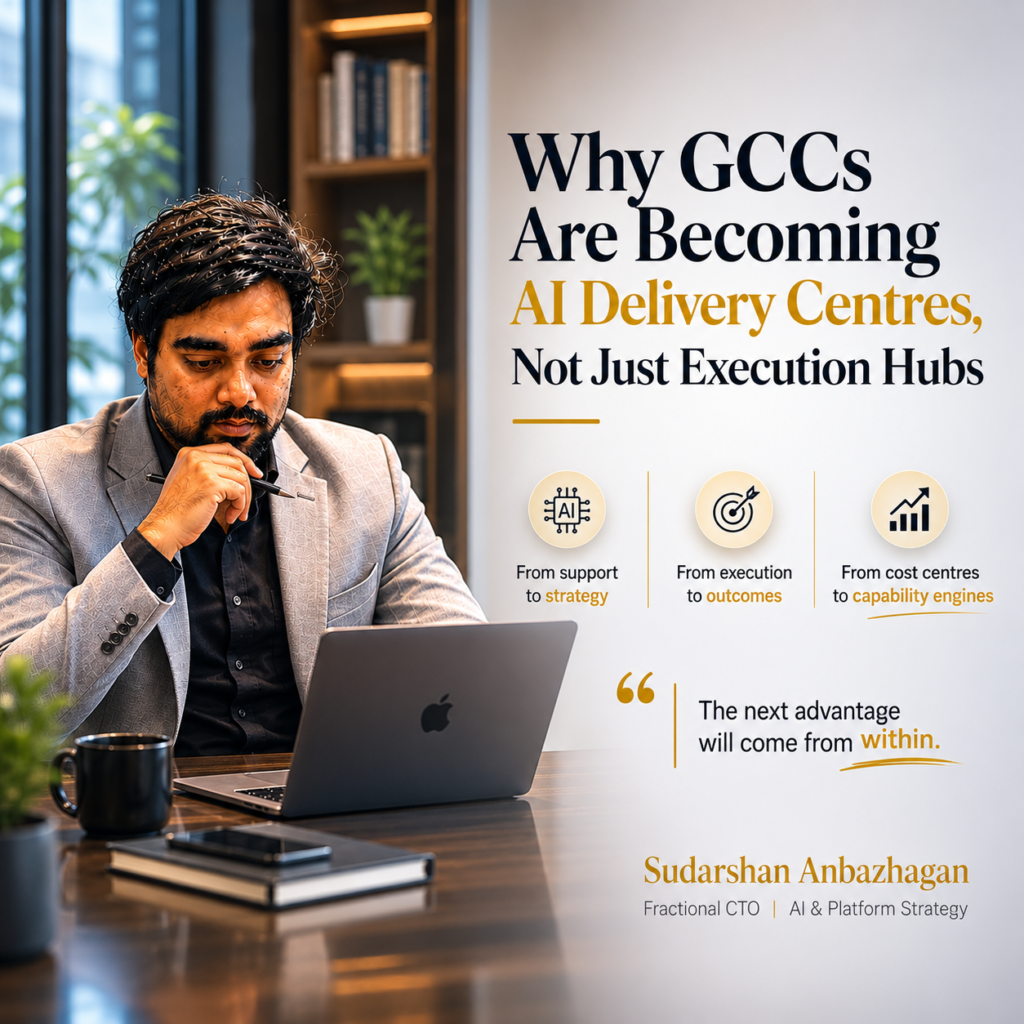
I walked into a GCC last year and asked the team a simple question: how would you describe what you do, in your own words? Their answer was nothing like what headquarters had told me. Headquarters described reliable execution, strong SLAs, and consistent delivery. The team described something entirely different. They told me they had spotted a process gap three months earlier that the parent organisation had not yet noticed, and they had built an AI-assisted review that cut manual effort by 60%. Nobody had asked them to. They identified the opportunity, designed the solution, and delivered the outcome entirely on their own initiative. These were not exceptional circumstances. This was simply a team that had reached a level of operational maturity and contextual depth where the most valuable contribution they could make was not completing the tasks assigned to them, but improving the conditions under which those tasks were being completed. They were not waiting to become a strategic partner. They already were one. Headquarters just had not updated the description yet. The shift of GCCs becoming AI delivery centres is not a future possibility. It is already underway.
What is happening across high-performing GCCs right now is not driven by a strategic directive from headquarters. It is driven by the talent inside these centres applying AI to the work they understand most deeply, and the results are changing what those centres are genuinely capable of contributing. The engineers, analysts, and operations specialists who have spent years building domain knowledge in their functional areas are now using AI to amplify that knowledge in ways that produce outcomes headquarters never anticipated and often cannot fully replicate from their own vantage point. This is creating a new contribution layer that sits above execution and below full strategic ownership, a layer where the GCC is not simply delivering against a brief but actively improving the business context that the brief was drawn from. The organisations that recognise and build on this shift will be in a fundamentally different competitive position within two to three years. The ones that continue to measure GCC performance only against SLA compliance and delivery metrics will watch that potential compound quietly without ever benefiting from it.
Why GCC Leaders Have a Strategic Opportunity That Most Are Not Yet Claiming
The practical opportunity this shift creates for GCC leaders is a fundamental change in the terms of the conversation with headquarters. The traditional GCC performance conversation is built around the question: did you hit the SLA? It is a delivery accountability conversation, and it is entirely appropriate for a centre operating at Stage 1 or Stage 2 of GCC maturity. But when a centre has reached the point where its teams are identifying and addressing business problems that headquarters has not yet noticed, that conversation is no longer sufficient to capture or communicate the value being created. The new conversation that is available to GCC leaders who recognise this shift is: here is what we changed, here is why we changed it, and here is what it delivered for the business. That is a strategic accountability conversation, and it positions the GCC not as a delivery centre being evaluated against a brief but as a capability partner being evaluated against business outcomes.
Making that transition in the conversation requires more than performance data. It requires a narrative capability that many GCC leaders have not yet developed because they have not yet needed it. It requires the ability to connect a specific technical or operational improvement to a specific business outcome that headquarters actually cares about, to quantify that connection in terms that resonate at the executive level, and to present it as evidence of strategic partnership rather than as a reporting update. This is a communication capability, and like all capabilities, it develops through deliberate practice. The GCC leaders I have seen make this transition most successfully are the ones who began having these conversations before they had perfect data, who brought their best examples of AI-driven improvement into the executive relationship proactively, and who used those conversations to shift the terms of engagement from compliance to contribution. That shift does not happen overnight. But it begins with a decision to start the conversation differently, and it compounds from there with every successful example of AI-enabled business impact that the centre can demonstrate.
The Responsibility That Comes With the Opportunity
There is a significant responsibility that comes with the opportunity this shift represents, and it is one that GCC leaders must approach with the same rigour they would apply to any strategic initiative. AI adoption that is not connected to a clear outcome framework produces efficiency in pockets. Teams find faster ways to do tasks that might better be eliminated. Individual workflows improve without contributing to the business outcomes that headquarters actually tracks. The AI capability grows in capability without growing in business relevance. And when headquarters eventually asks what the AI investment has delivered for the organisation, the answer is a set of efficiency metrics that are internally meaningful but externally disconnected from the commercial, operational, or strategic priorities that drive the parent organisation’s decisions.
The GCC leaders who make this transition deliberately are the ones who connect every AI capability investment to a business outcome that headquarters actively measures and cares about. Not internal efficiency. Business impact. Not faster task completion. Fewer escalations reaching the parent organisation. Not improved process metrics. Improved customer outcomes that the parent organisation can see in its own performance data. This connection work is harder than the technical work. It requires the GCC leader to develop a deep understanding of what headquarters is trying to achieve strategically, which business metrics are under the most leadership scrutiny, and where the GCC’s operational domain intersects with those commercial priorities in ways that AI can meaningfully improve. When that connection is made clearly and maintained consistently, the GCC is no longer delivering value. It is generating it. That distinction is what transforms the relationship from a managed service into a strategic partnership, and it is available to every GCC leader willing to do the work of making the connection explicit.
The GCCs That Will Lead This Shift and the Ones That Will Follow
The shift from execution hub to AI delivery centre is already determining which GCCs will be in a position of genuine strategic influence within their parent organisations two years from today and which will remain valued but ultimately replaceable delivery resources. The centres that lead this shift share several characteristics worth understanding. They have invested in building the internal capability to identify AI opportunities systematically rather than waiting for headquarters to define the use cases. They have developed the outcome measurement and communication framework that connects those AI capabilities to business metrics at the executive level. They have built the leadership confidence to bring their observations and proposals to the parent organisation proactively rather than waiting for permission to operate at a strategic level. And they have created internal cultures where improvement is as celebrated as delivery, where a team member who identifies a better way is as valued as one who executes the existing way flawlessly.
The centres that will follow this shift rather than lead it are the ones that are waiting for headquarters to tell them it is acceptable to think at this level. They have the talent to do what the leading centres are doing. They have the operational depth and the contextual knowledge. What they lack is the leadership permission structure and the strategic confidence to begin operating at the level their capability already supports. This gap is not technical. It is cultural and structural, and it is entirely within the GCC leader’s authority to close. The question every GCC leader should be asking right now is not whether their teams are capable of contributing at the AI delivery centre level. In most high-performing GCCs, the answer to that question is already yes. The question is whether the leadership structure, the measurement framework, and the parent organisation relationship are currently set up to recognise, resource, and reward that level of contribution. If the answer to that question is not yet, changing it is the most important strategic work available to a GCC leader today. Explore the GCC maturity model I have written about previously for a framework on how this progression works in practice.
If your GCC is navigating this transition and you want a practical perspective on how to connect AI capability to business outcomes in terms that resonate at the executive level, connect with me on LinkedIn or read more at sudarshananbazhagan.com. The GCCs that lead this shift will be in a different position than their peers within two years. The window for claiming that position is open now.