In many organizations, conversations about technology often begin with tools. Leadership teams evaluate platforms, compare vendors, and review technology stacks to determine which systems best support operational requirements. These discussions are both practical and necessary because digital infrastructure now supports nearly every function within modern enterprises. However, for executive leaders responsible for long-term enterprise performance, technology decisions extend beyond selecting tools. At the leadership level, technology decisions represent governance decisions that influence how the organization operates, scales, and maintains stability over time.
Technology today shapes how information moves across departments, how teams collaborate across regions, and how leaders gain real-time visibility into enterprise performance. Systems influence reporting integrity, operational transparency, and the ability of leadership teams to guide strategic growth with clarity. When viewed through this broader leadership lens, technology becomes more than a set of operational tools. It becomes a structural component of enterprise governance that supports long-term business scalability and operational excellence.
Organizations that approach technology decisions through a governance perspective often create stronger alignment between digital investments and business strategy. Systems introduced within a clear governance framework support cross-functional collaboration, strengthen enterprise risk management, and enable leadership teams to maintain consistent visibility across complex operations. In this way, technology becomes a strategic enabler of enterprise performance rather than simply an operational resource.
The Evolution of Technology Leadership
Over the past two decades, the role of technology within enterprises has evolved significantly. Historically, technology investments were often evaluated primarily by operational or technical teams. Decisions focused on system functionality, infrastructure compatibility, and implementation feasibility.
Today, digital systems influence nearly every dimension of enterprise activity. Customer engagement platforms, financial reporting systems, supply chain technologies, and data analytics environments collectively shape the way organizations operate and compete in dynamic markets. As technology becomes more deeply integrated into enterprise processes, its influence extends beyond operational efficiency to include enterprise strategy, governance, and risk management.
This evolution has naturally shifted technology leadership closer to executive decision-making. Technology architecture now influences how organizations expand into new markets, how leadership teams evaluate enterprise performance, and how companies maintain operational continuity across increasingly distributed environments. As a result, executive leaders increasingly view technology decisions as structural decisions that influence the organization’s long-term direction.
This perspective encourages leadership teams to evaluate technology within a broader governance framework. Rather than focusing exclusively on features or vendor comparisons, executives consider how systems shape accountability structures, operational transparency, and long-term scalability. When governance thinking accompanies technology investments, digital systems become integrated components of enterprise leadership rather than isolated operational tools.
Governance as the Foundation of Sustainable Technology Strategy
Technology continues to evolve at a rapid pace. New platforms emerge, vendors introduce enhanced capabilities, and digital ecosystems expand across industries. Governance provides the structural stability that allows organizations to navigate this evolving landscape with confidence and clarity.
A well-designed governance framework ensures that technology investments align with enterprise strategy and support long-term organizational objectives. It defines how systems integrate with existing processes, how data ownership is structured, and how leadership teams maintain visibility into operational performance.
Within mature enterprises, technology governance supports several important leadership outcomes:
- Sustainable business scalability supported by adaptable digital architecture
- Cross-functional coordination across operations, finance, technology, and customer teams
- Structured enterprise risk management supporting security and compliance
- Operational excellence through integrated systems and consistent processes
- Alignment between digital initiatives and strategic business objectives
When these governance elements guide technology decisions, organizations gain a stable digital foundation that supports both operational performance and strategic growth.
A Governance Lens for Evaluating Technology Investments
Executive leadership teams often evaluate technology investments through a governance lens that extends beyond technical functionality. This perspective considers how systems influence organizational structure, operational clarity, and long-term enterprise performance.
Several governance considerations frequently guide executive evaluation of technology decisions.
Strategic Alignment with Business Direction
Technology investments should support the organization’s broader strategic direction. Platforms introduced today will influence operational structures and decision-making processes for many years. Leadership teams therefore examine whether new systems reinforce long-term growth priorities and integrate effectively with the enterprise architecture being developed.
Strategic alignment ensures that technology investments strengthen the organization’s future operating model while supporting current operational needs.
Ownership and Accountability Beyond Implementation
Successful system implementation is an important milestone, but the value of technology is realized through ongoing governance and operational accountability. Leadership teams therefore establish clear ownership structures that define how systems are managed after deployment.
Clear governance structures often include:
- Responsibility for system performance and reliability
- Ownership of enterprise data accuracy and reporting frameworks
- Cross-departmental coordination for platform utilization
- Leadership oversight for continuous improvement and system optimization
When ownership is clearly defined, technology platforms remain aligned with enterprise outcomes and continue supporting operational excellence.
Enterprise Scalability and Long-Term Architecture
Technology decisions should support the organization’s future scale. As businesses expand across markets, regions, and customer segments, digital systems must remain adaptable and capable of supporting growing operational complexity.
Executive leadership therefore evaluates whether technology architecture supports long-term scalability. Systems designed with scalability in mind enable organizations to expand smoothly without frequent restructuring or disruption.
Enterprise Risk Management
Technology governance also supports enterprise risk management. Digital systems influence data governance, regulatory compliance, operational continuity, and vendor relationships. Executive teams therefore consider how technology decisions contribute to a balanced and well-structured risk management framework.
Leadership discussions often include considerations such as:
- Security architecture and data protection standards
- Regulatory compliance across operating regions
- Vendor partnerships and contractual flexibility
- Business continuity planning and operational resilience
Through this governance approach, technology investments contribute to both innovation and stability.
Strengthening Internal Capability
Modern enterprises often collaborate with external partners to accelerate digital initiatives. Managed technology teams, specialized consulting firms, and global capability centers contribute valuable expertise that enables organizations to move forward with confidence.
At the same time, leadership teams recognize the importance of strengthening internal capability. Long-term enterprise resilience depends on the organization’s ability to understand, govern, and evolve its own digital infrastructure. Governance frameworks therefore encourage knowledge transfer, internal architecture ownership, and continuous development of enterprise technology expertise.
Governance in Global Capability Center Strategy
Technology governance becomes particularly important when organizations establish Global Capability Centers (GCCs) or managed technology teams. GCC models have become increasingly common among enterprises seeking operational efficiency, access to global talent, and scalable digital capability.
Many organizations across North America and Europe now rely on GCC environments to support engineering operations, data analytics, enterprise systems management, and digital innovation initiatives. When structured effectively, these capability centers strengthen operational excellence and enable organizations to expand digital capacity across global markets.
The long-term success of GCC initiatives is often influenced by governance clarity. When leadership teams establish clear decision frameworks, architectural standards, and accountability structures, capability centers become integrated contributors to enterprise strategy.
Governance frameworks for GCC environments often include:
- Defined enterprise architecture standards guiding system development
- Clear accountability structures connecting execution teams with global outcomes
- Performance visibility frameworks providing leadership with real-time operational insights
- Executive sponsorship linking GCC initiatives to strategic leadership priorities
These governance structures allow capability centers to operate as coordinated extensions of enterprise strategy.
The Expanding Role of the CTO in Enterprise Governance
Within modern enterprises, the role of the Chief Technology Officer extends beyond managing digital infrastructure or introducing new technologies. Technology leadership now operates at the intersection of strategy, operational performance, and governance.
A mature CTO perspective focuses on designing stable and scalable digital environments that support long-term enterprise performance. In this context, technology leadership contributes to several critical organizational priorities.
These responsibilities frequently include:
- Designing enterprise technology architecture aligned with strategic growth
- Supporting cross-functional alignment across operational departments
- Strengthening operational excellence through integrated digital systems
- Embedding security and resilience into enterprise infrastructure
- Enabling business scalability through adaptable technology platforms
Through these responsibilities, the CTO contributes to enterprise stability while supporting continuous innovation.
Technology Governance as a Source of Strategic Advantage
Modern organizations operate within complex digital ecosystems where data, processes, and operations intersect across departments and geographic regions. Governance frameworks provide the structure necessary to manage this complexity with clarity and confidence.
When technology decisions are guided by governance principles, organizations gain several strategic advantages:
- Greater executive visibility into enterprise performance
- Stronger alignment between technology initiatives and business strategy
- Consistent enterprise architecture supporting integrated operations
- Balanced risk management across security, compliance, and vendor relationships
- Sustainable scalability that supports long-term organizational growth
In this environment, technology becomes a strategic capability that supports leadership decision-making and strengthens enterprise performance.
Conclusion: Governance as the Foundation of Technology Leadership
Technology will continue evolving as organizations adopt new digital platforms and capabilities. However, the leadership principle that guides effective technology strategy remains consistent.
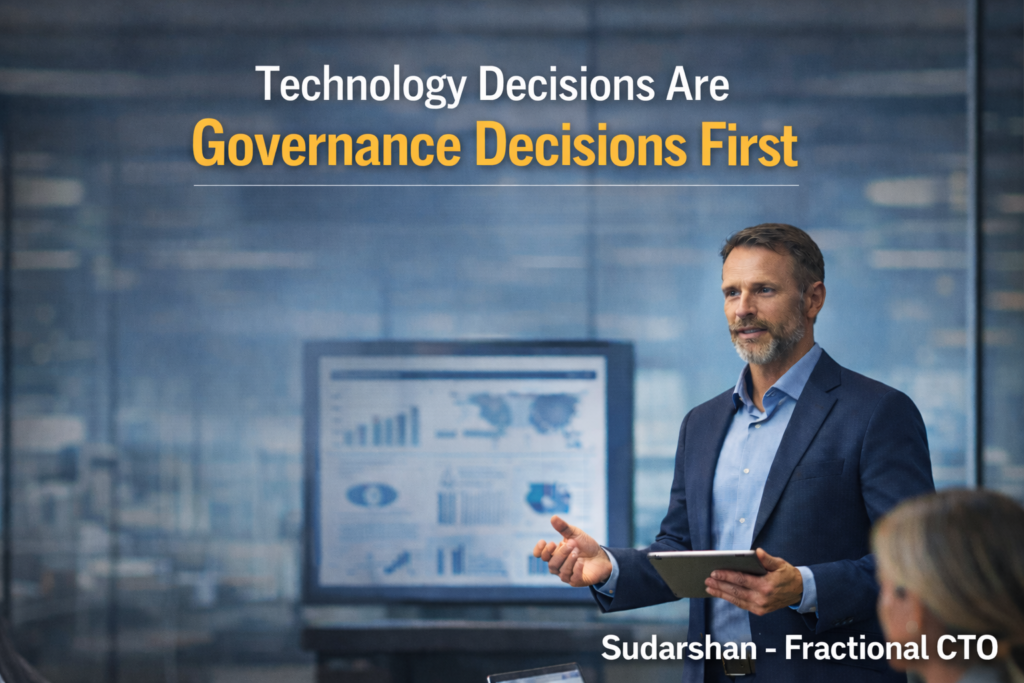
Technology decisions are governance decisions first.
When executive leaders evaluate digital investments through a governance framework, technology becomes an enabler of operational excellence, enterprise performance, and strategic growth. Systems support transparency, strengthen risk management, and provide the foundation for sustainable business scalability.
For organizations navigating an increasingly digital landscape, governance offers the structure that allows technology to deliver its full strategic value. Through thoughtful leadership, clear accountability, and long-term architectural thinking, technology becomes not only a tool for innovation but also a cornerstone of modern enterprise leadership.